Buckingham Farmhouse Homes: Stone Charm or New Design
If you picture morning light on fieldstone walls and a long front porch for coffee, Buckingham’s farmhouse life is probably already calling you. You want the charm and acreage without giving up good design or daily convenience. In this guide, you’ll learn how to read the architecture of historic stone homes, what to expect from barn conversions, how modern-farmhouse new builds differ, and what due diligence matters in 18912. Let’s dive in.
Buckingham Township spans about 33 square miles and keeps a gently rolling, rural character that still shows its farming roots. You can find preserved farm complexes, stone houses from the 1700s and 1800s, and bank barns tucked into hillsides. You are also a short drive from Doylestown and New Hope, which makes daily errands and dining easy while you live in a quiet, pastoral setting.
For questions about permits, zoning, wells, or septic, the township’s building and zoning office is your first call. Review current requirements on the Buckingham Township resource page before you plan changes or a conversion. Visit the township’s Building & Zoning section for contacts and forms at the Buckingham Township website.
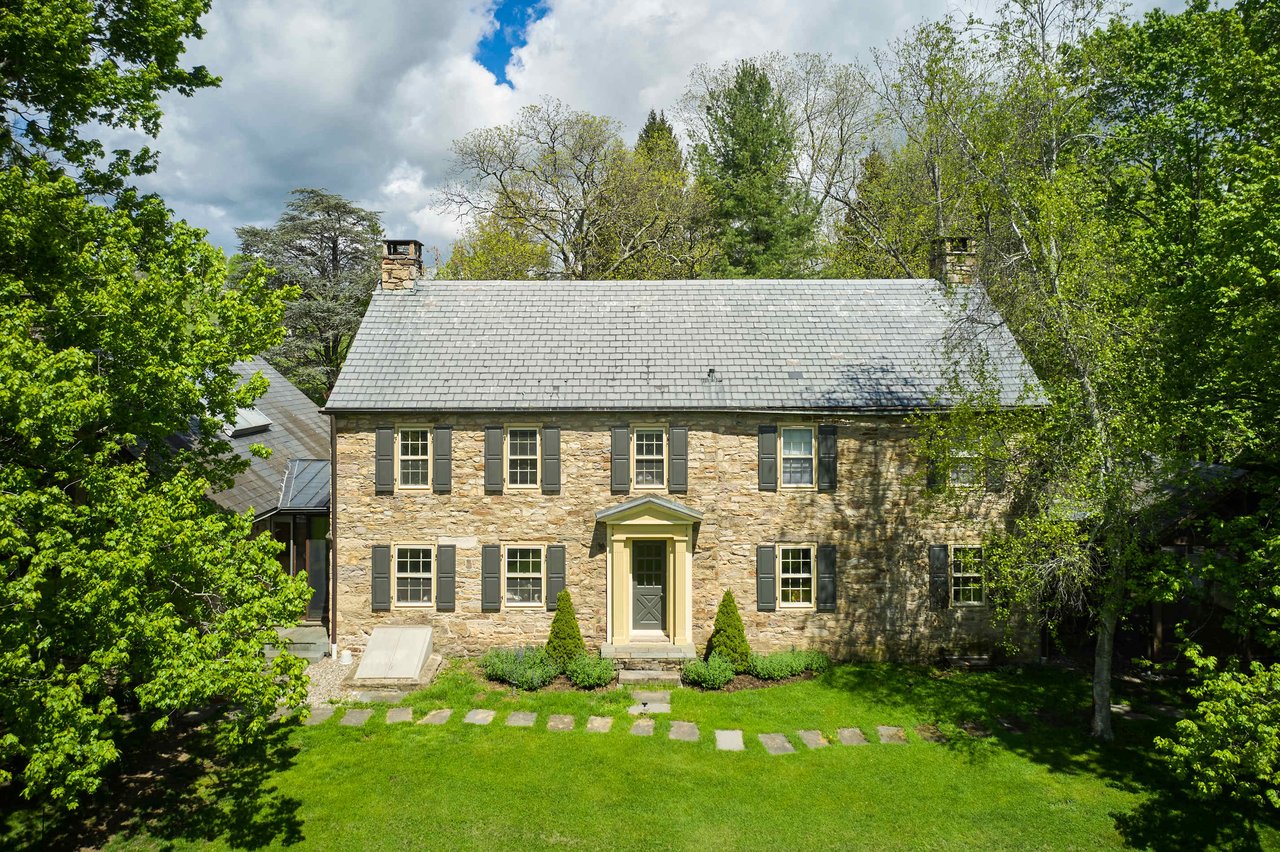
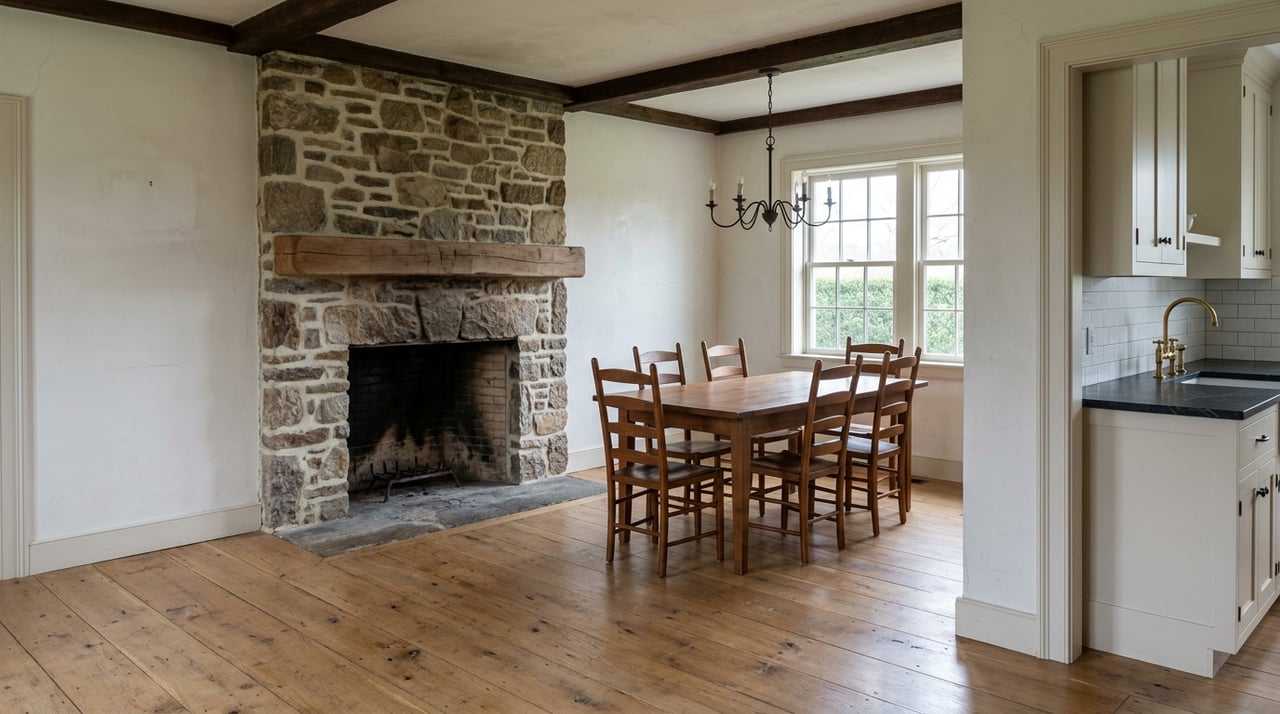
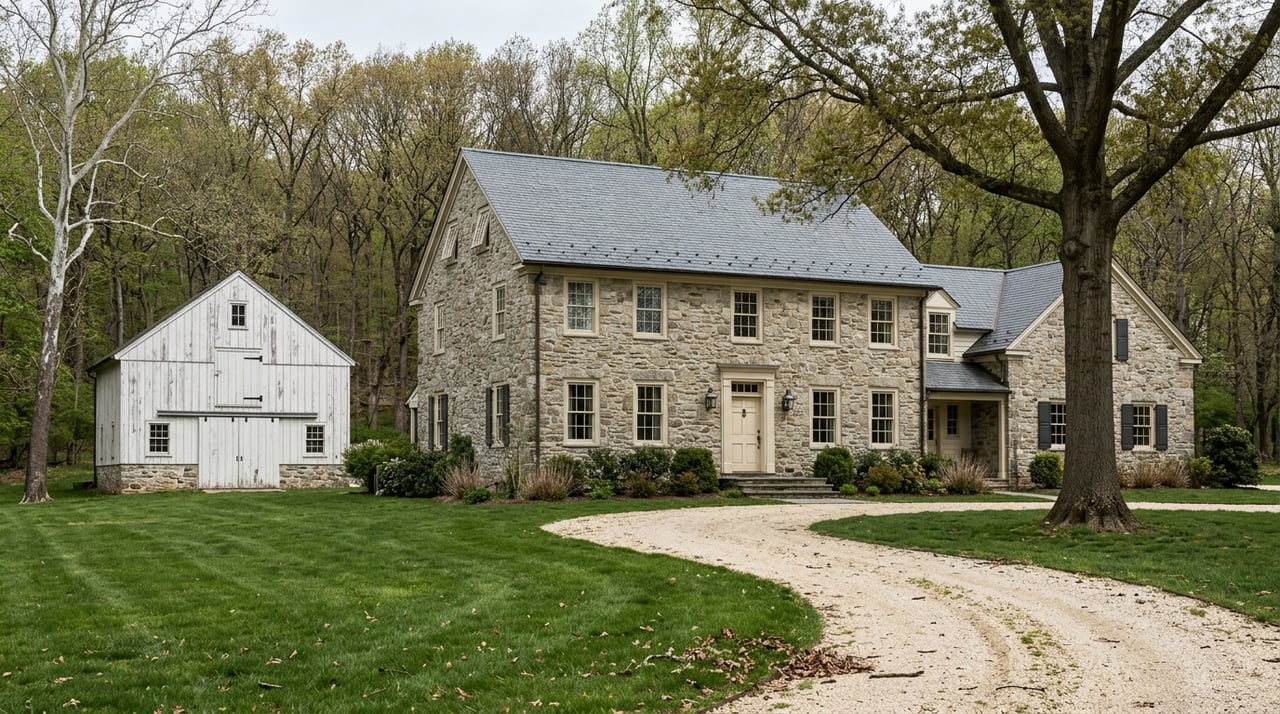
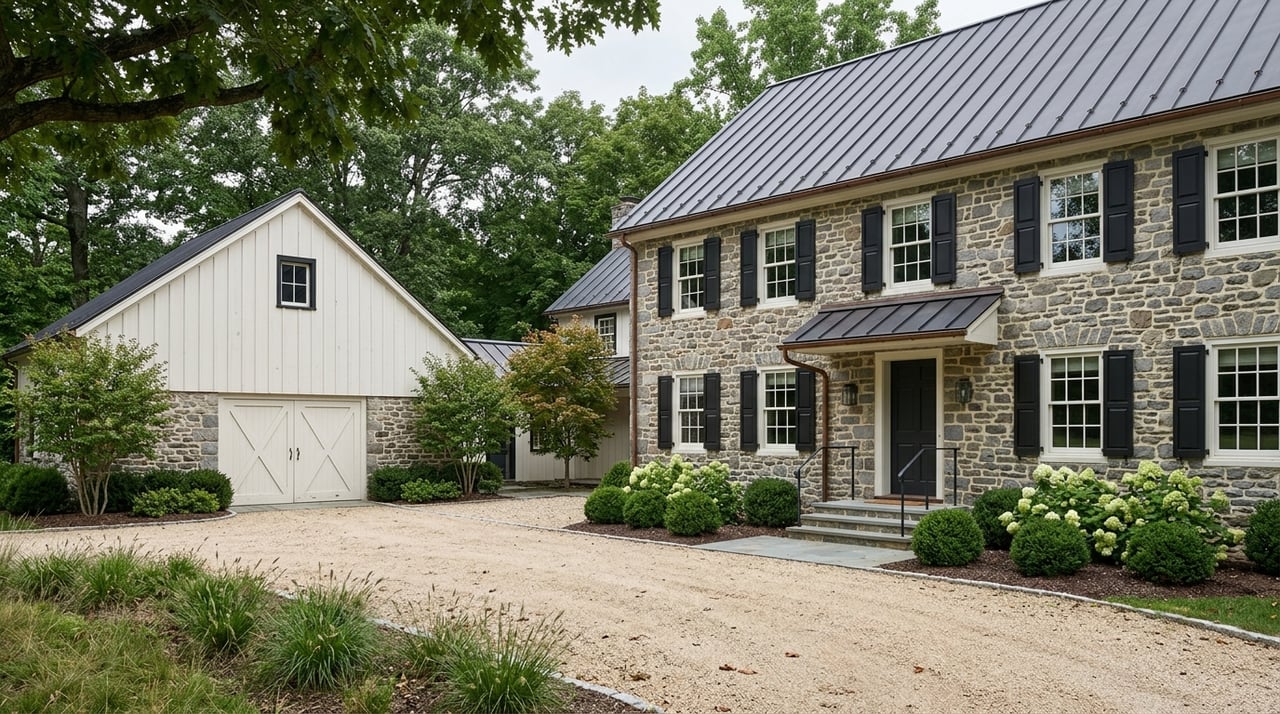
Buckingham and its neighboring villages include numerous 18th–19th century stone farmhouses, many with associated barns and springhouses. Local National Register listings like the Thomas and Lydia Gilbert Farm document the forms and details you’ll see across the township.
These are classic Bucks County signals of authenticity, described in regional surveys and guides to local farmhouses.
Historic property records, like the narrative for the Thomas and Lydia Gilbert Farm, offer helpful references when you are evaluating layout and fabric.
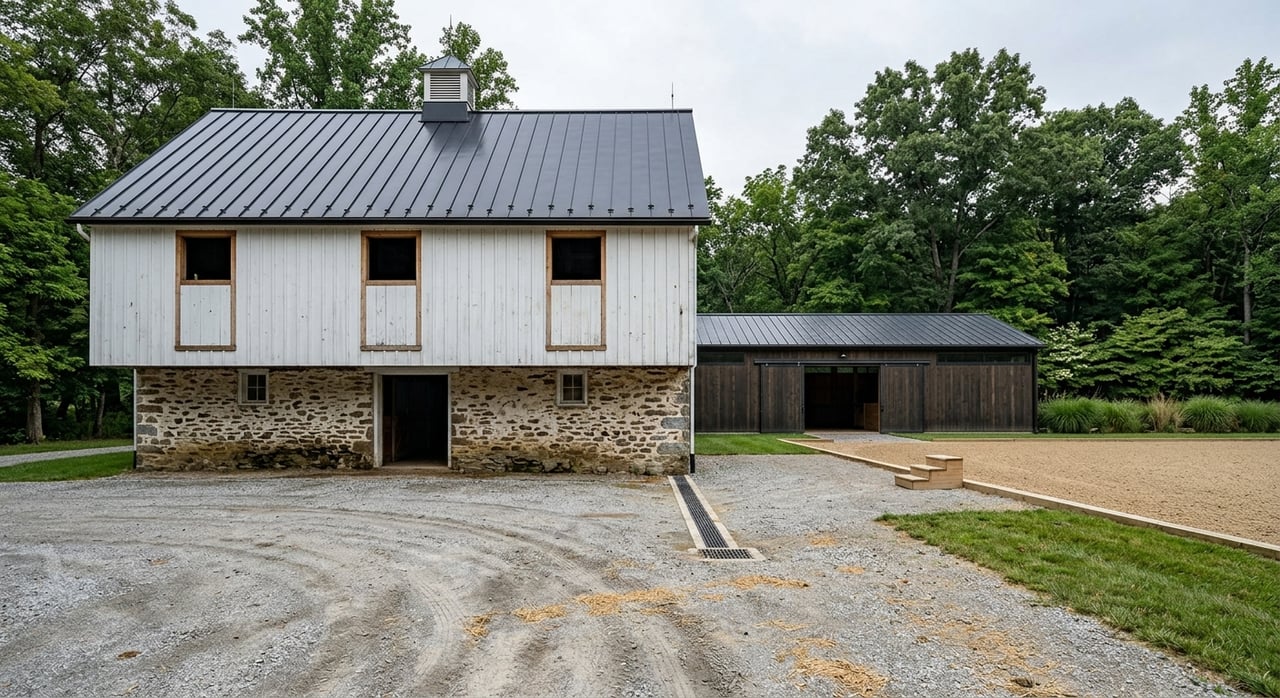
Bucks County’s bank barns are a defining feature. The hillside entry leads to the upper level, with the lower level once used for animals and storage. Heavy timber framing and stone lower walls often remain intact, which is why many barns become compelling living spaces.
Adaptive reuse works best with smart early planning. Common hurdles include foundation and moisture work, discreet routing of mechanical, electrical, and plumbing systems, and adding insulation without harming wood or stone. Start with a structural review and a moisture and energy strategy before you sketch finishes. For a deeper primer on these challenges, see this adaptive-reuse overview on barn conversions and moisture and insulation planning.
Zoning is also key. A change of use can require special review in rural districts. Confirm what is permitted with the township’s Building & Zoning office before you commit to scope.
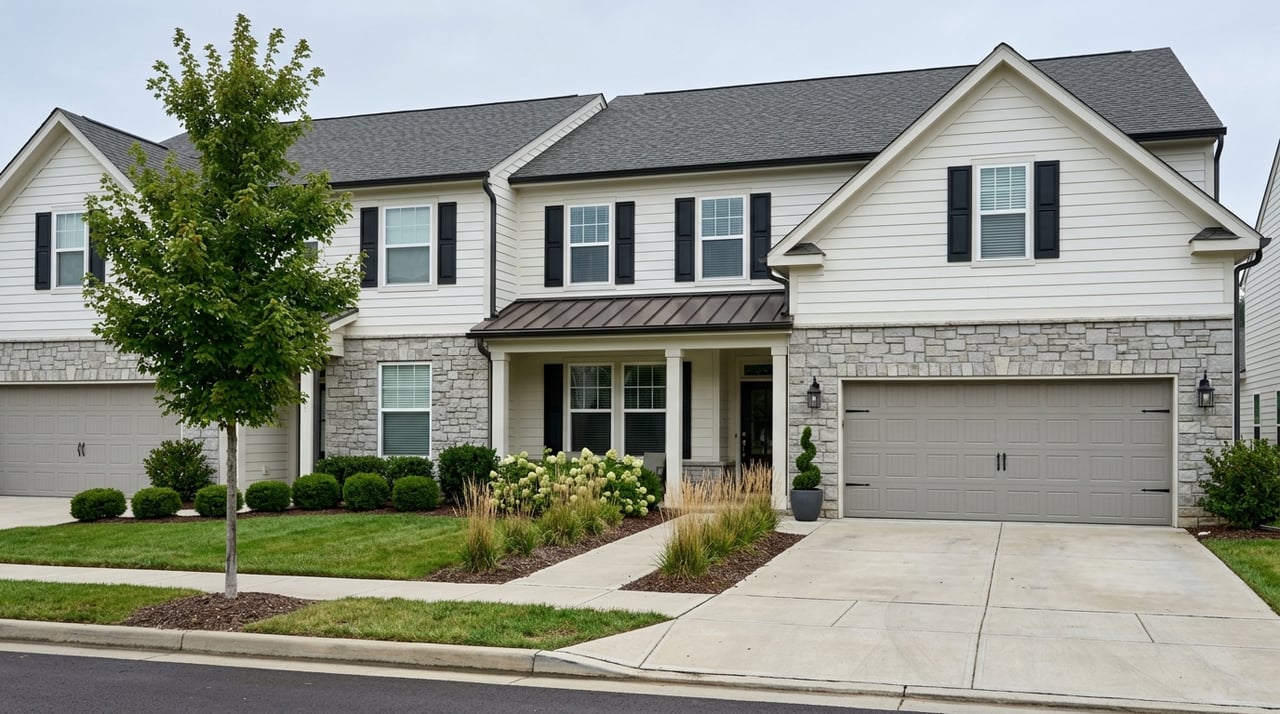
Not every buyer wants to manage 200-year-old masonry. If you love the farmhouse aesthetic with modern performance, today’s new-build “modern farmhouse” homes can be a great fit in Buckingham’s rural setting.
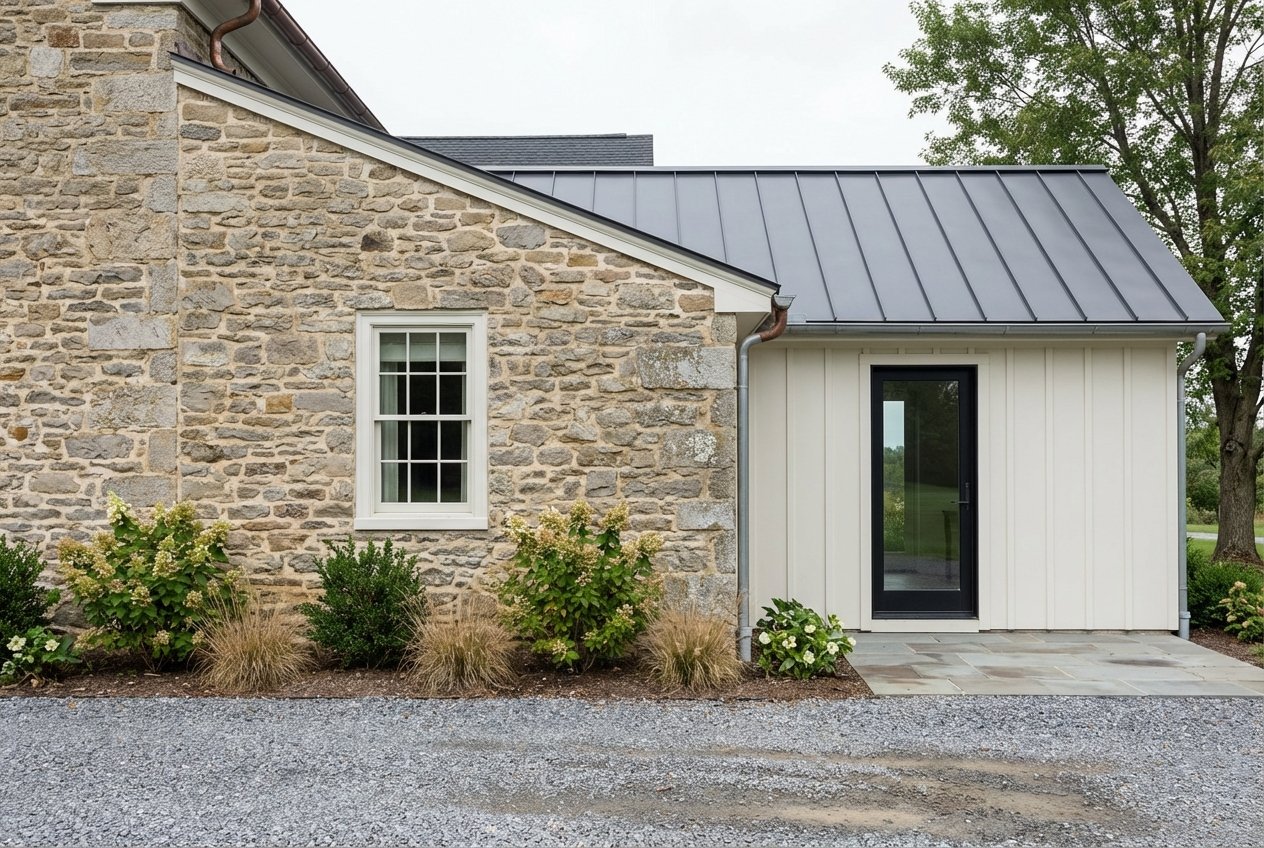
New homes often feature board-and-batten or painted clapboard siding, dark window frames, and metal roof accents. Interiors lean on natural materials, a stone fireplace, and tailored details like apron-front sinks and shiplap accents. These choices continue to rank among top plan trends. See current design signals in the latest plan-trend roundup.
Expect an open great-room and kitchen with island seating, generous windows, and porches that connect to the landscape. Main-level primary suites, mudrooms off the garage, and flexible office spaces are common. Many plans add vaulted ceilings and large sliders to capture rural views.
Bucks County’s Agricultural Land Preservation Program has permanently preserved thousands of acres. If a property carries a conservation easement, subdivision and development can be limited. Review county resources and deed records before you assume expansion potential. Learn more at the county’s Agricultural Preservation Program page.
Buckingham is primarily rural, with village-center zoning in places. Minimum lot sizes, accessory uses, and barn-to-dwelling conversions vary by district, so verify with the township. Many properties rely on private wells and onsite septic. Ask for well yield and water-quality tests, plus septic permits and recent pump or inspection records. Buckingham’s Building & Zoning page outlines contacts and local requirements.
If you are buying a historic stone farmhouse, sequence your improvements for the best return and least risk.
Fix water first. Address grading, gutters, downspouts, and any runoff patterns before interior work. See guidance on controlling unwanted moisture in historic buildings.
Secure the roof and chimneys. Stop active leaks and check flashing.
Repoint only with compatible mortar. Hire a mason familiar with lime-based systems. Review NPS guidance on repointing to understand testing and matching methods.
Improve the envelope thoughtfully. Air-seal and insulate the attic first. With solid stone walls, interior insulation must be vapor-open and carefully designed to avoid trapped moisture. A literature review of retrofit strategies highlights capillary-active materials like wood-fiber or high-performance mineral wool as options, ideally after a hygrothermal assessment.
Upgrade HVAC with care. Cold-climate heat pumps and ductless mini-splits are popular in older homes that lack ducts. If you plan energy improvements, check current federal incentives and consult IRS Form 5695 instructions for eligibility and caps.
Use this list during showings and negotiations. Ask for documentation when available.
If you value provenance and tactile materials, a stone farmhouse offers irreplaceable character. Be ready to invest in thoughtful stewardship. If you prize convenience, flexible layouts, and energy performance, a modern-farmhouse new build delivers the look with less maintenance. Many buyers choose a hybrid: a restored stone core with a well-designed new addition that respects scale and materials.
When you are weighing options, walk both paths. Stand in a timber-framed loft under a bank-barn roof, then step into a light-filled, vaulted great room in a new build. One will speak to how you want to live, entertain, and work.
Ready to explore what fits your life in Buckingham? For private tours, design-savvy guidance, and a clear plan to buy or sell, connect with Dana Lansing. Request Your Private Home Valuation.
Stay up to date on the latest real estate trends.
Dana's many repeat clients are a testament to the experience she brings to the process and the level of service she provides. With her knowledge of the market, she can also help clients understand what improvements make financial sense.