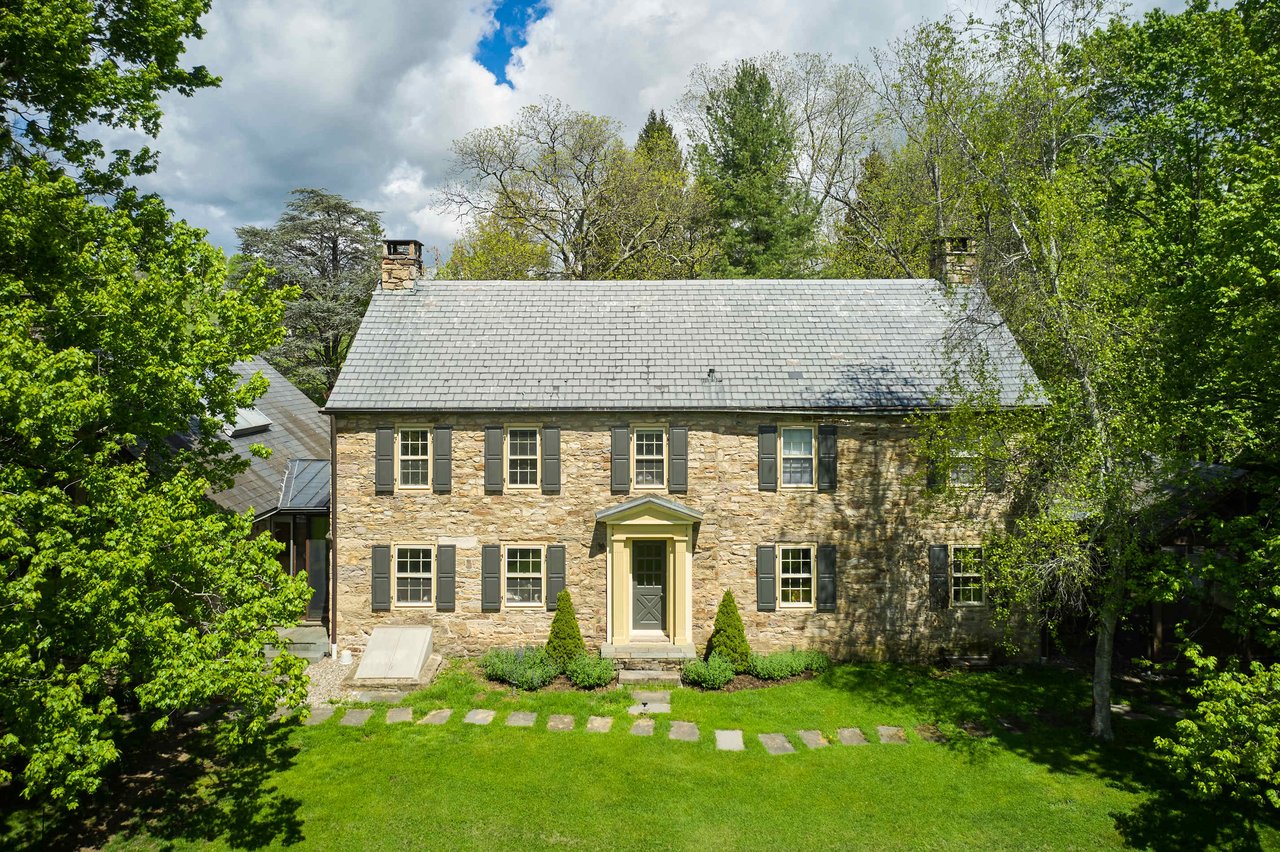
Washington Crossing PA Estates With Commuter Access
If you want room to breathe without giving up access to Philadelphia, Princeton, or even New York, Washington Crossing stands out for a reason. This is a place where estate-scale properties, preserved land, and a commuter-friendly location come together in a way that feels both practical and rare. If you are weighing a move here, or thinking about how this market works, this guide will help you understand what makes Washington Crossing distinct and what to watch for before you buy or sell. Let’s dive in.
Washington Crossing sits in Upper Makefield on the Bucks County side of the Delaware River. Upper Makefield describes itself as a modern-day bedroom community that attracts people working in New Jersey, New York, and Pennsylvania, which helps explain the area’s long-standing appeal to professionals who want more land and privacy without stepping too far from major job centers.
The local profile supports that commuter identity. Upper Makefield spans 21.25 square miles, has an estimated population of 8,848, and reports a mean travel time to work of 27.4 minutes. It also has a 95.3% owner-occupied housing rate and a median household income of $212,768, all of which point to a stable, ownership-driven market.
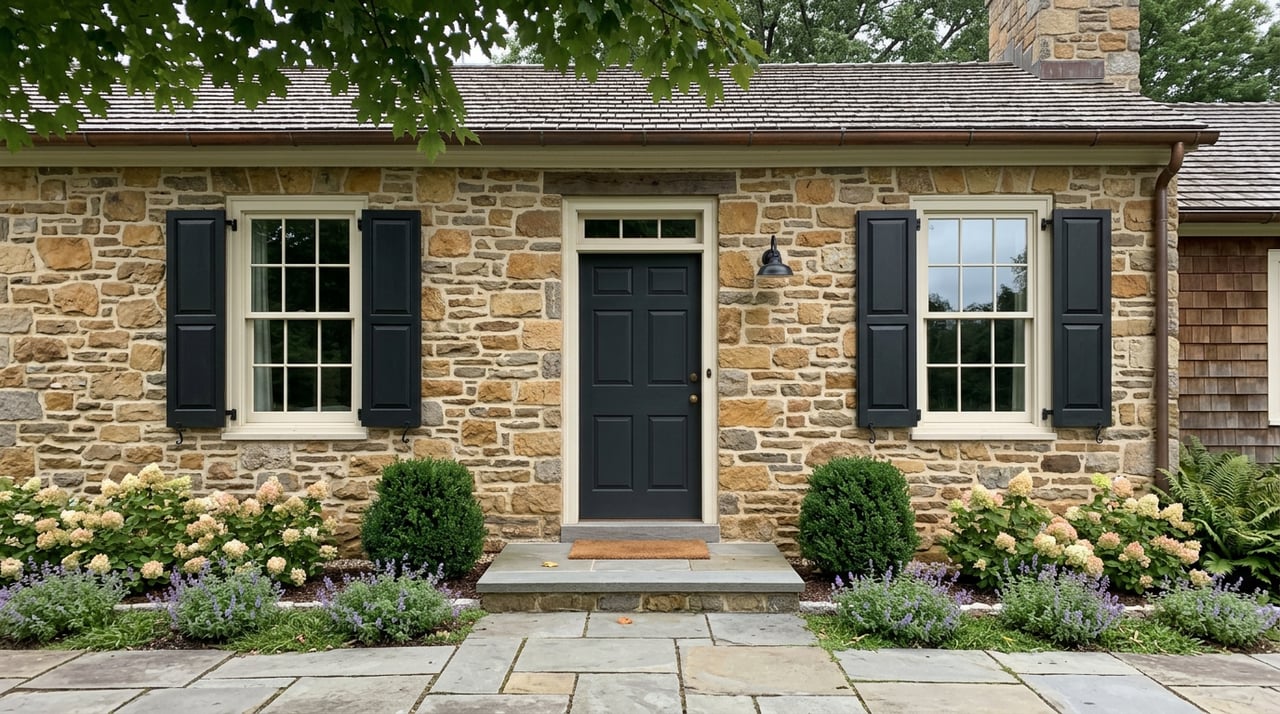
For many buyers, the draw is not just the commute. It is the combination of accessibility and setting. Washington Crossing offers a lower-density environment with preserved open space, historic character, and estate-style homes that can feel very different from a more station-centered suburb.
Washington Crossing reads as an estate market because the land-use pattern is different from conventional suburban development. In Upper Makefield’s joint comprehensive plan, rural residential land is defined as parcels with a single-family detached home on lots of 5 acres or more, while agricultural land is 20 acres or more.
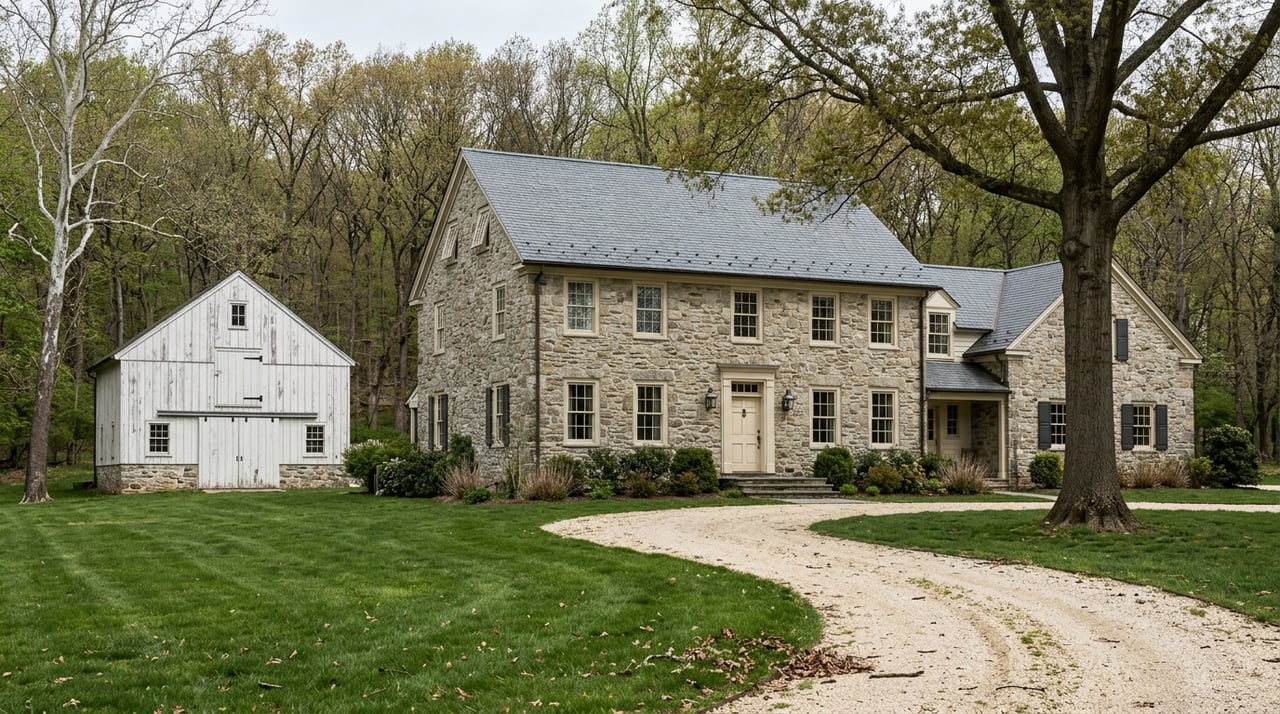
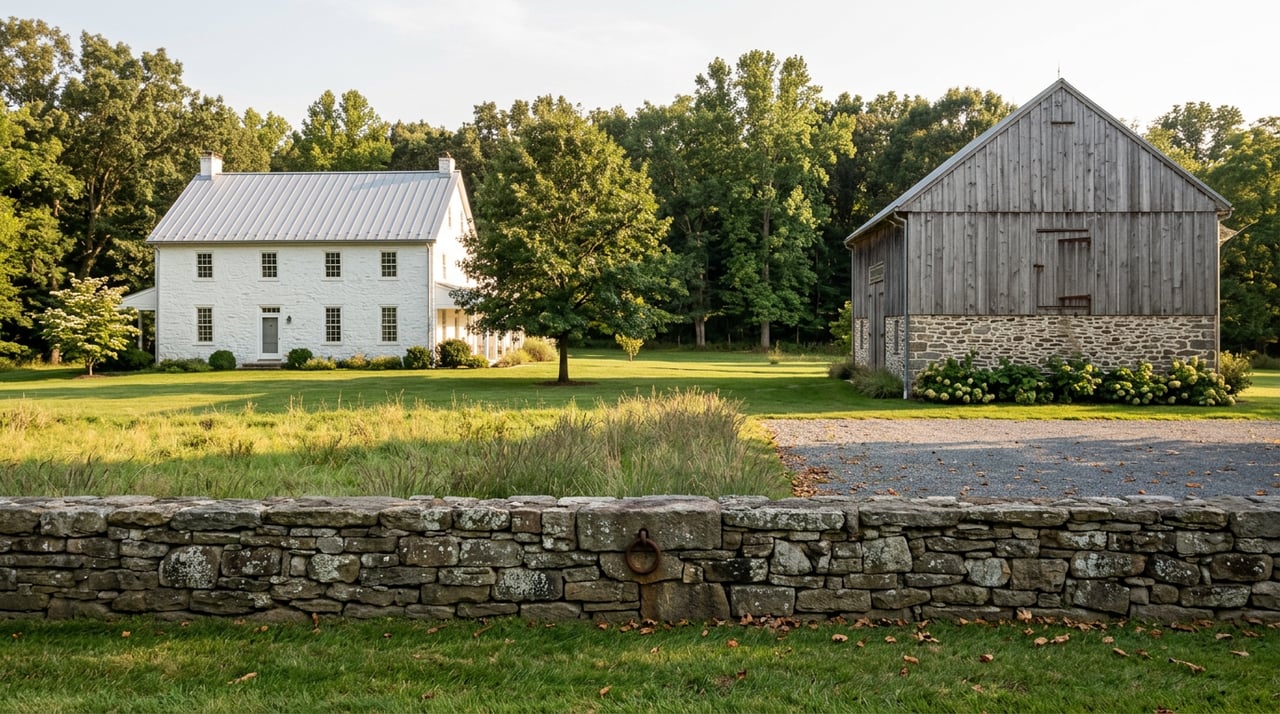
That framework shapes what you often see on the ground. Instead of tighter subdivision housing, buyers may encounter detached homes on acreage, former farmstead tracts, and other low-density properties where the land itself is part of the value. For a commuter, that can mean a home that feels more like a retreat at the end of the day.
There is also real scarcity built into the market. More than 38% of Upper Makefield land, or 5,000 acres, has been permanently preserved, with the township prioritizing scenic viewsheds, farmland, greenway corridors, and watershed protection. That preservation helps protect the area’s visual character, but it also limits how much new supply can come online.
Washington Crossing sits in a premium segment of the Bucks County market. A current Realtor.com snapshot for Upper Makefield shows a median sale price of $1,799,500 and 23 homes for sale, suggesting limited inventory in a high-value setting.
Public data also shows a high baseline for housing values. Census QuickFacts reports a median value of owner-occupied housing units of $876,200, alongside the township’s 95.3% owner-occupied rate. In practical terms, this is not a market driven by rapid turnover.
That matters if you are buying or selling. Buyers may need patience and a clear sense of priorities, especially if they want acreage, architectural character, or a specific setting. Sellers, meanwhile, benefit from a market where presentation, condition, and fit with the lot and landscape can strongly influence buyer response.
For many residents, Washington Crossing works best as a drive-first commuter location. Bucks County’s transportation profile places the county between Philadelphia and Princeton, with access to I-95/I-295, Route 202, the Pennsylvania Turnpike, Amtrak, SEPTA, and NJ Transit.
Locally, the road network matters. Washington Crossing Historic Park identifies River Road, Taylorsville Road, and I-295/Old I-95 as key connectors. The park also notes that the Washington Crossing Bridge has a 3-ton limit, so larger vehicles need to use Route 202 or I-295 crossings instead.
If you are heading into Philadelphia, the usual pattern is by car or by car-to-rail connection. One practical route is to use local roads to reach the I-295 corridor, then continue into the city or transfer at Trenton Transit Center.
SEPTA states that Trenton Transit Center connects to the Trenton Line, Amtrak, NJ Transit, and bus routes. SEPTA’s Trenton Line serves Center City Philadelphia, which gives commuters another option when they do not want to drive the full trip.
For Princeton-bound commuters, NJ Transit says the Dinky connects downtown Princeton and Princeton University with Princeton Junction in about five minutes. Princeton Junction then connects to Northeast Corridor service.
For New York travel, NJ Transit lists Trenton Transit Center, Hamilton, Princeton Junction, and New York Penn Station on the Northeast Corridor. In other words, Washington Crossing is generally more of a car-to-rail base than a walk-to-train suburb, which is important to understand before you choose a property.
One of Washington Crossing’s biggest advantages is that the setting is not accidental. Upper Makefield’s preservation priorities focus on scenic viewsheds, farmland, greenway corridors, and watershed protection, which helps maintain the area’s open and rural character.
The area also carries a strong historic presence. Washington Crossing Historic Park is a National Historic Landmark, and Bowman’s Hill Tower overlooks the Delaware River Valley. Upper Makefield’s history includes historic villages, historic homes, and the 200-acre farmstead at 1201 River Road that became the David Center for the American Revolution.
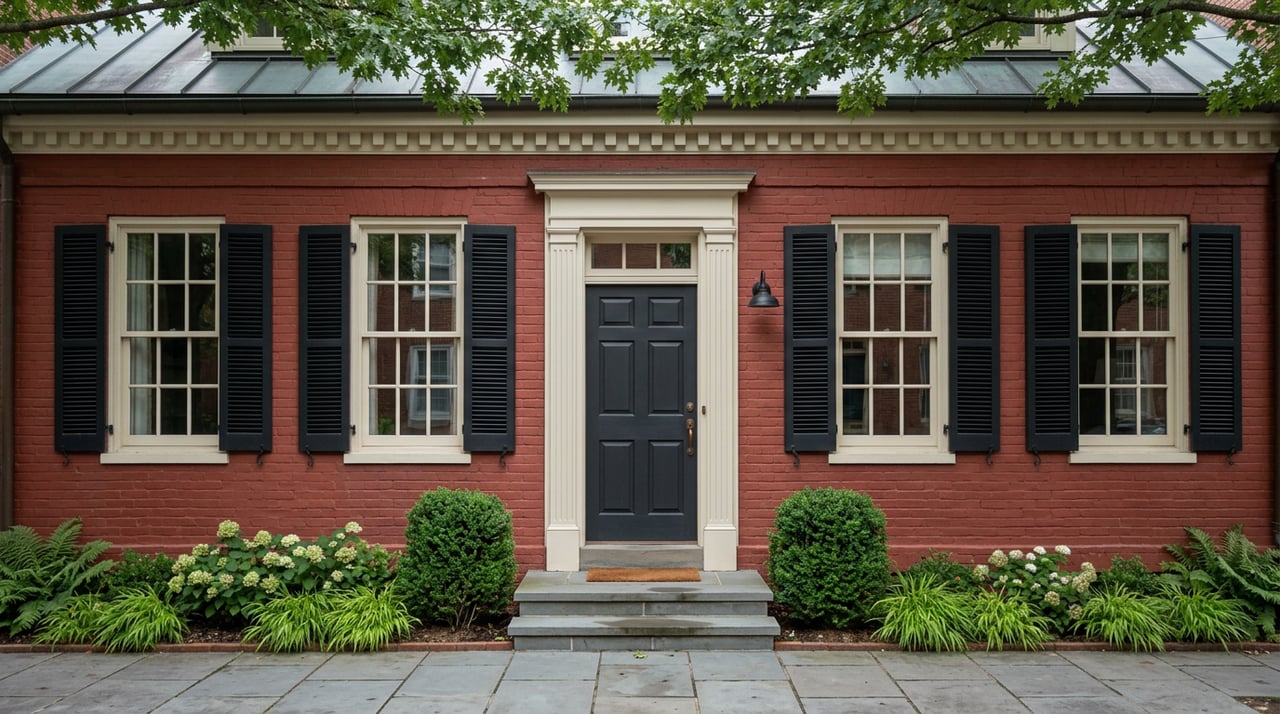
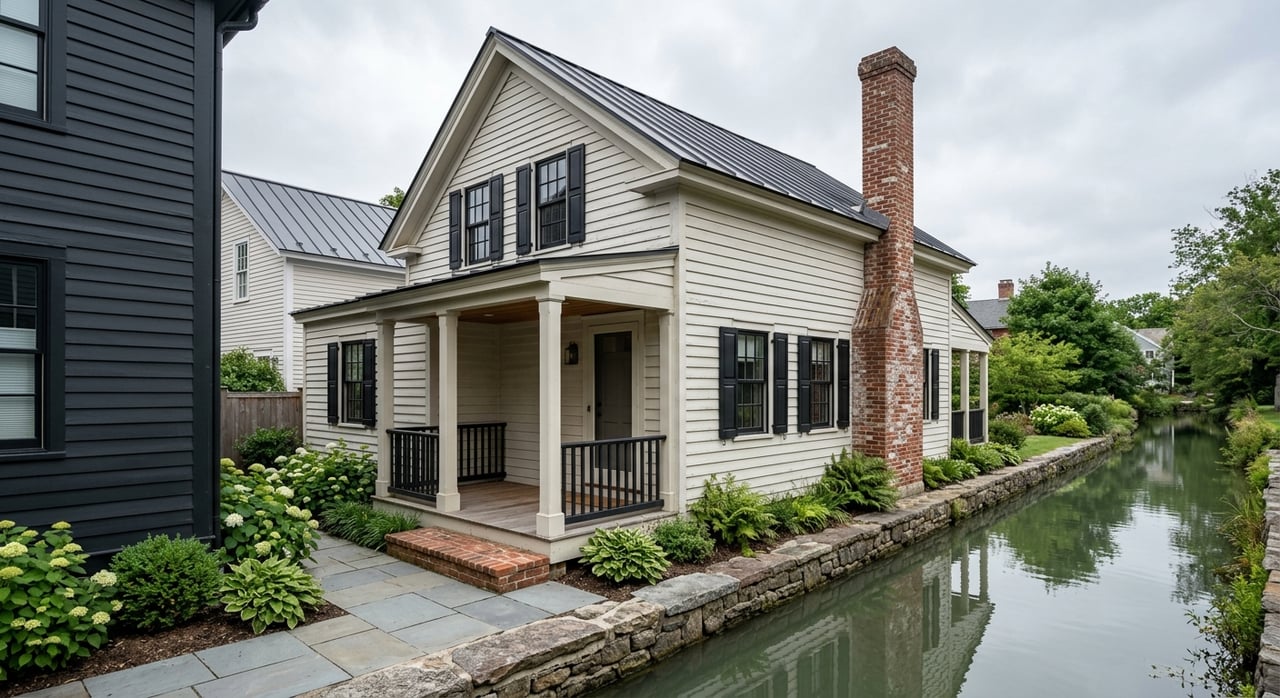
For buyers, this means the appeal of a property often goes beyond square footage. The quality of the landscape, the relationship of the house to the site, and the broader sense of place can all play a meaningful role in long-term value.
Estate properties in Washington Crossing come with different due diligence than a typical subdivision home. Utility and site conditions deserve close attention early in the process.
Upper Makefield states that it does not have public water, and that most sewage treatment is handled by on-lot systems. Owners must submit septic hauler reports every two to three years, and some districts have special sewage management requirements.
The township also directs residents to private well-management guidance. That means buyers should be ready to evaluate well and septic conditions as part of their purchase review, especially on larger parcels or older homes.
Road access is another practical issue that can affect daily living. Upper Makefield Public Works maintains 56 miles of township roads, while PennDOT maintains several state roads in the township.
Winter plowing is shared, and private-road potholes may be the responsibility of a homeowners association. If you are comparing estate properties, confirm whether the road, driveway, and snow maintenance obligations are township, state, HOA, or private-owner responsibilities.
If you are buying with plans to renovate, expand, or add outdoor improvements, the review process matters. Upper Makefield says large additions and pools require consultant review, subdivisions need Planning Commission and Board of Supervisors approval, zoning relief goes to the Zoning Hearing Board, and tree removal of 10 inches or more requires a permit.
That does not mean improvement is off the table. It does mean you should approach changes with a clear understanding of township review and with respect for the property’s site, scale, and setting.
In Washington Crossing, not every improvement adds value in the same way. Because the market is shaped by preservation priorities, low-density zoning, and a limited supply of estate-style homes, buyers tend to respond best to homes that are well maintained, thoughtfully updated, and appropriately scaled to the lot.
Poorly sited or overbuilt improvements can be a harder sell, especially when buyers are paying close attention to land, views, privacy, and architectural fit. In this kind of market, design judgment is not just aesthetic. It can affect marketability.
For sellers of architecturally significant or acreage properties, presentation also matters at a high level. The right pre-market guidance can help clarify which updates are worth making, how to frame the home’s design strengths, and how to position the property within a limited but discerning buyer pool.
Washington Crossing is not a one-size-fits-all market. Two homes with similar square footage can perform very differently based on lot size, site placement, condition, and how well the house relates to the land.
That is why design literacy can be especially valuable in this area. If you are buying, it helps to understand renovation feasibility, site constraints, and the difference between cosmetic appeal and lasting value. If you are selling, it helps to know how to present architectural character and setting in a way that supports pricing and buyer confidence.
In an estate market shaped by preservation, history, and commuter practicality, the details matter. A nuanced read of the property is often what separates a good decision from an expensive one.
If you are considering a move to Washington Crossing, or preparing to sell a distinctive home here, a tailored strategy matters. Dana Lansing brings architectural insight, refined market guidance, and boutique representation to buyers and sellers navigating Bucks County’s most unique properties.
Stay up to date on the latest real estate trends.
Dana's many repeat clients are a testament to the experience she brings to the process and the level of service she provides. With her knowledge of the market, she can also help clients understand what improvements make financial sense.