Weekender Living In Stockton’s Canal District
Are you looking for a weekend place that feels genuinely different from a typical suburban second home? In Stockton, weekend living is shaped less by gated amenities and more by the quiet pull of the Delaware River, the canal towpath, and a small historic townscape that still reads as part of an older working landscape. If you want to understand what makes this setting special, and what to watch for as a buyer, this guide will help you see Stockton through a more informed lens. Let’s dive in.
Stockton Borough is a small Delaware River town in Hunterdon County with roots that reach back to ferry crossings and early river trade. The borough’s history traces the community from Reading Ferry to Howell’s Ferry, then Centre Bridge Station, before the name Stockton was adopted in 1851 and the borough was incorporated in 1898.
That history still shows in the physical setting today. Official sources describe Stockton as a roughly one-mile stretch along the Delaware River, and the borough notes that the town remains much as it was in the eighteenth century. For you as a buyer, that means the appeal is tied to scale, continuity, and a sense of place that has been carefully preserved over time.
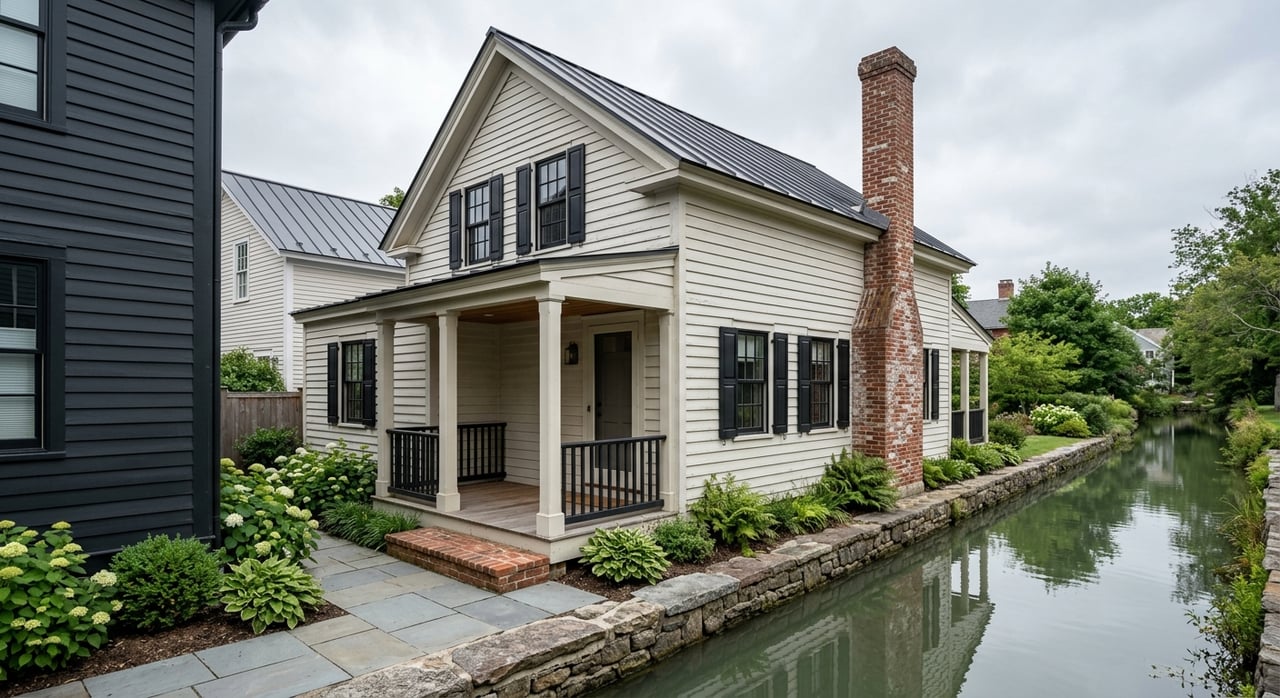
For a weekend-home lifestyle, Stockton makes the most sense when you think of it as part of the Delaware and Raritan Canal corridor. The D&R Canal State Park is a more than 70-mile linear park, and Stockton sits within that broader river-and-canal landscape rather than apart from it.
This matters because your experience of the town is shaped by more than the house itself. You are not just buying into a single street or a neatly packaged district. You are buying into a setting defined by the canal, the river, the feeder route, and a sequence of connected historic towns along the Delaware River Scenic Byway.
The Delaware River Scenic Byway places Stockton on the river route between Trenton and Frenchtown, alongside towns such as Lambertville, Titusville, and Raven Rock. That gives weekend living here a wider geographic rhythm.
In practical terms, Stockton can serve as a base for scenic drives, short outings, and day-to-evening plans that move easily between towns. The value is not only in what sits within the borough line, but in how connected the town feels to the larger river corridor.
Weekend living in Stockton tends to be active, low-key, and outdoors oriented. The canal towpath is flat and continuous, and NJDEP identifies it as a place for cycling, running, hiking, birdwatching, fishing, paddling, and even winter skiing.
If you picture the ideal weekend as something relaxed rather than overly programmed, Stockton fits that pattern well. You can start the day with a walk or bike ride, spend time along the river, and return to town without needing a long list of planned activities.
One of the most useful features of this corridor is how easy it is to build a longer outing. NJDEP notes that six Delaware River bridges, including the Stockton bridge, create loop trails that connect the New Jersey and Pennsylvania canal systems.
That gives you more flexibility than a single out-and-back path. For a second-home owner, that kind of access can make short stays feel fuller and more varied without adding stress or travel time.
Prallsville Mills gives Stockton an important cultural center. Stockton Borough’s history says the site hosts concerts, art exhibitions, antique shows, holiday parties, school fund-raiser auctions, meetings, and private parties, while the New Jersey Historic Trust notes that rehabilitation work created public event and educational space.
For you, that means the town’s weekend appeal is not limited to outdoor recreation. It also includes a modest but meaningful social and cultural layer that supports gathering, entertaining, and a more design-minded appreciation of place.
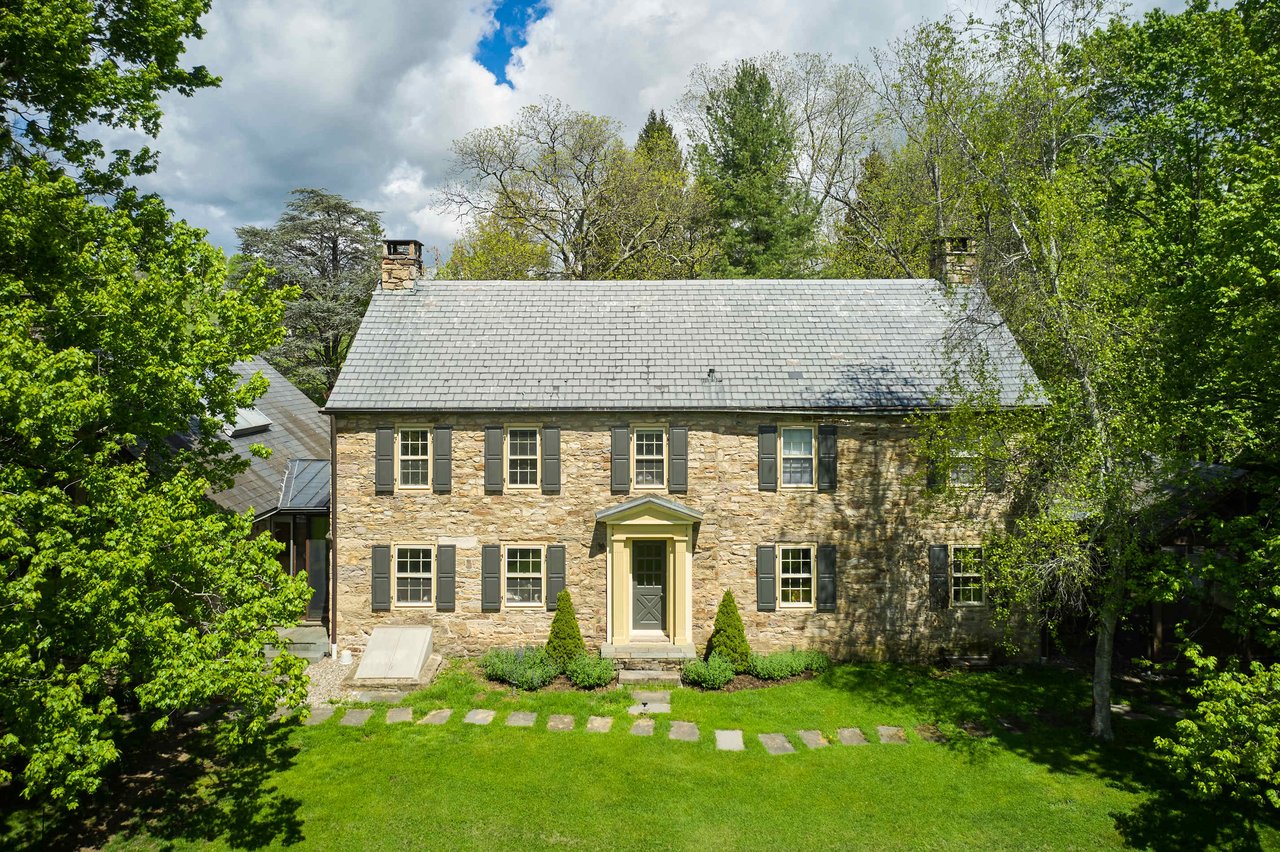
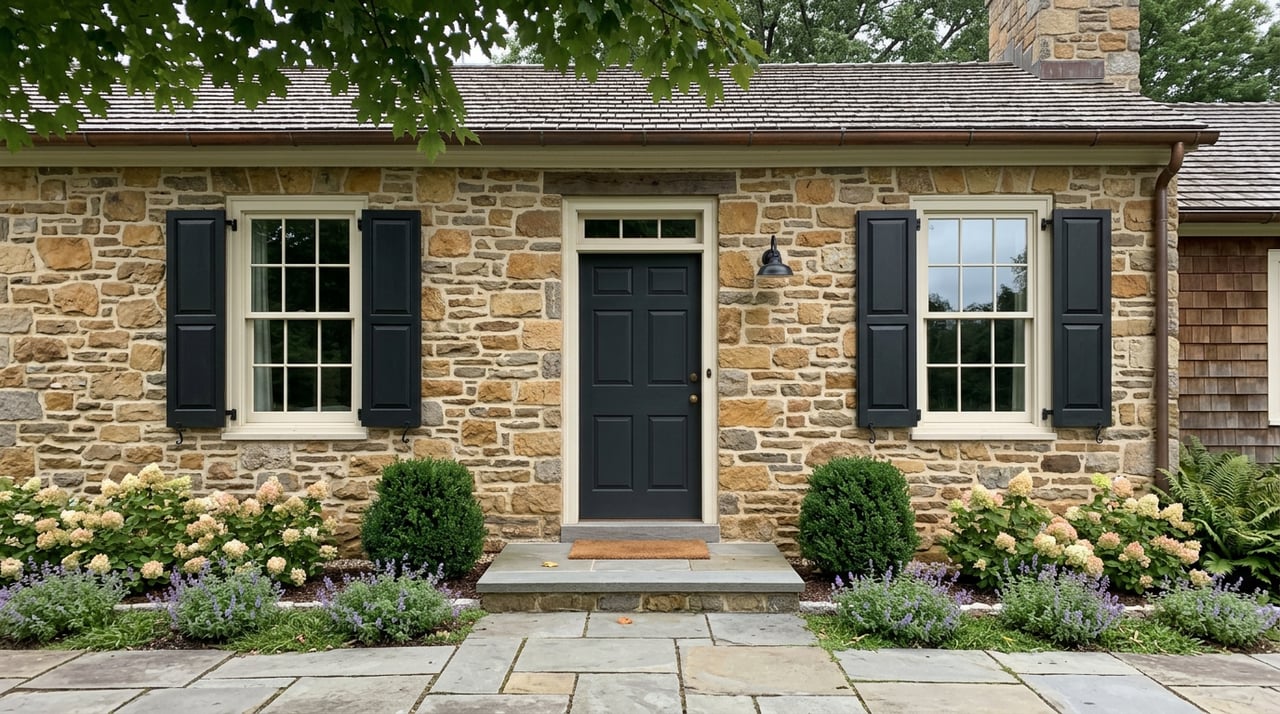
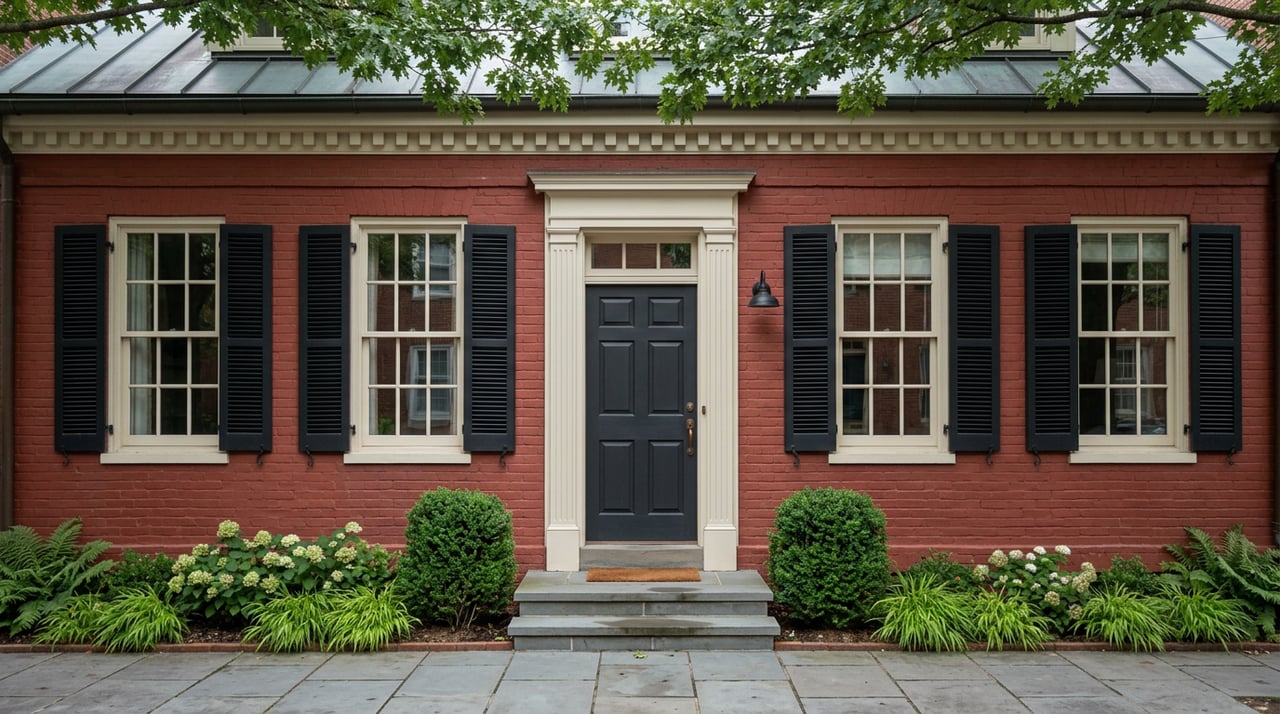
Stockton’s housing stock is best understood through its historic and mill-related development. Sources describe small historic houses, mill-associated buildings, and preserved civic landmarks rather than large tracts of new construction.
That distinction is important if you are searching for authenticity. The town’s charm comes from modest scale, historic texture, and a built environment that grew from working river and canal uses rather than from a single planned style.
The Prallsville Historic District dates to the early 1700s, and by 1834 it included a grist mill, store, tavern, and about 6 to 8 houses. Today, the New Jersey Historic Trust describes Prallsville as a ten-building complex that includes an 1877 grist mill, a 1790 linseed oil mill, an 1850 sawmill, a 1900 grain silo, and houses built for owners and millers.
That kind of history supports a housing story rooted in vernacular architecture and lived-in character. If you are drawn to homes with provenance, layered materials, and a close relationship to the street or landscape, Stockton is likely to feel more compelling than a polished but generic retreat market.
The District No. 98 Schoolhouse offers another clue to the borough’s character. Built in 1872 to 1873 and enlarged in 1884, it is described by the state as the longest continuously operating school building in New Jersey, with Gothic style, clapboard siding, and original windows.
Even if you are not buying a landmark building, details like these shape your experience of the town. They reinforce a sense of continuity and help explain why Stockton appeals to buyers who notice proportion, materials, and architectural context.
If you are considering Stockton as a weekend base, design awareness matters. This is a place where value often comes from understanding what is already there, what should be preserved, and what kind of updates can support both livability and long-term appeal.
For buyers who appreciate architectural character, that can be a major advantage. A careful eye can help you distinguish between a house that simply looks quaint and one that offers meaningful design potential within a historically sensitive setting.
Buyers interested in updates should go in with realistic expectations. In Stockton’s canal-adjacent setting, renovation is often less about dramatic reinvention and more about thoughtful stewardship.
The Delaware and Raritan Canal Commission reviews development projects within a designated review zone for factors such as stormwater drainage and water quality, stream corridors, visual, historic, and natural quality, and traffic. Zone A extends 1,000 feet on either side of the canal centerline.
This does not mean canal-area projects cannot move forward. It does mean that siting, materials, and approvals may carry more weight than they would in a typical suburban remodel.
If you are evaluating a property for a second-home purchase, it helps to think beyond finishes and room counts. You should also consider how the location, historic context, and review framework may affect your timeline and renovation choices.
Stockton’s preservation culture is active, not theoretical. New Jersey’s 2024 historic-grant announcements included Prallsville Mills, and the District No. 98 Schoolhouse received a 2024 preservation-plan grant from the New Jersey Historic Trust.
That is a useful signal for buyers. It shows that Stockton’s character is being maintained through ongoing stewardship, which helps protect the very qualities that make the town attractive for weekend living.
Stockton is not the right fit for every second-home search. If you want a newly built environment with a more conventional amenity package, you may find the town’s historic scale and preservation context too specific.
But if you are drawn to a retreat that feels grounded, visually distinctive, and connected to outdoor life, Stockton offers a compelling alternative. Its appeal comes from the canal corridor, the Delaware River setting, the social role of Prallsville Mills, and a housing story shaped by modest historic buildings rather than uniform development.
For many buyers, that combination is exactly the point. You get a place that supports quiet weekends, active mornings, scenic drives, and a stronger connection to architecture and landscape than many second-home markets can offer.
If you are exploring Stockton or other design-driven weekend-home opportunities along the river corridor, Dana Lansing brings architectural perspective, local market knowledge, and thoughtful guidance to your search.
Stay up to date on the latest real estate trends.
Dana's many repeat clients are a testament to the experience she brings to the process and the level of service she provides. With her knowledge of the market, she can also help clients understand what improvements make financial sense.